
Students on IGNOU Road should choose broadband around simultaneous classes, assignment uploads and the length of their stay. A shared flat may need stable service in several rooms, while an individual room may mainly need a reliable desk connection. Count overlapping study sessions and large downloads before selecting a plan.
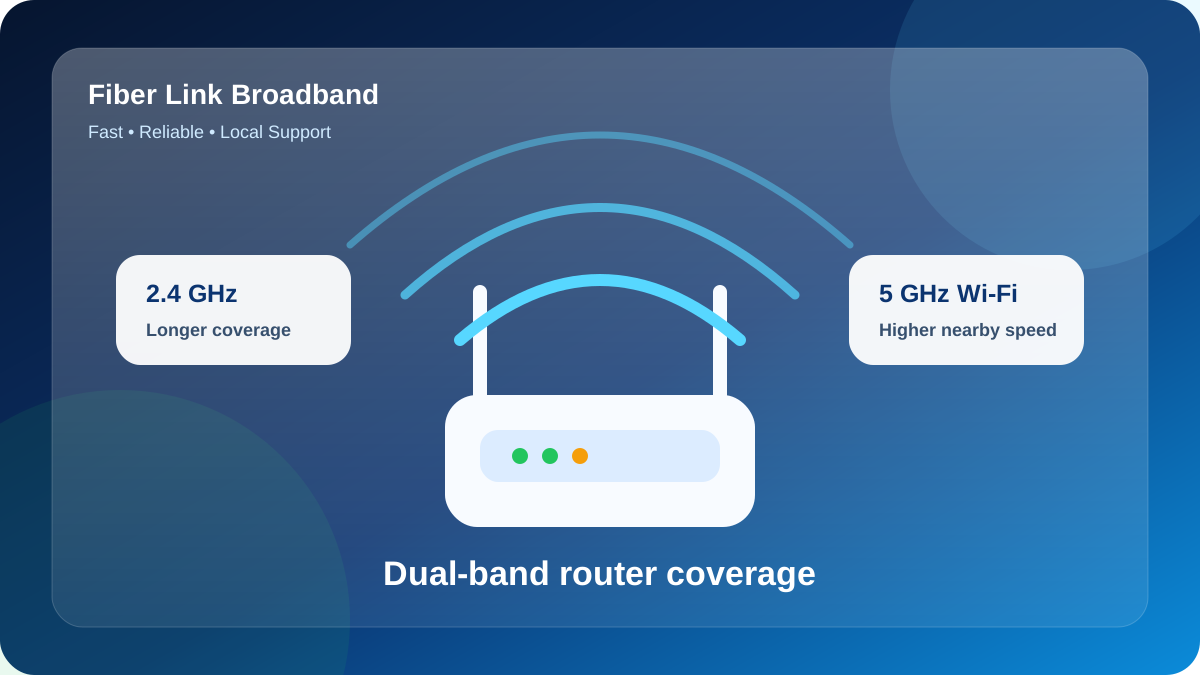
Planning your connection in IGNOU Road
Agree who holds the account and how roommates share the bill. Use a separate guest network where supported and avoid publishing the main password in public groups. If the property is a PG, confirm whether a private connection is permitted and who can approve the cable route. Include equipment-return and relocation terms when comparing packages.
Test an actual class platform and upload a non-sensitive practice file after activation. Keep mobile data ready for a submission deadline in case any fixed service is interrupted. For a suspected fiber break, share the ONT state, exact room and access contact. If the issue occurs only on one student's laptop, check that device before arranging cable work.
Plan around deadlines and shared responsibility
List overlapping classes and upload deadlines, then identify downloads that can run outside study time. A clear schedule can help a shared connection stay responsive. Choose a plan using simultaneous activity and the property layout, not only the number of roommates. Ask about relocation or cancellation if your course or tenancy is short.
Agree one account contact and keep bills and equipment-return terms accessible to the responsible residents. Use secure credentials and guest access where supported. Test the actual class platform after activation and keep a mobile fallback for an urgent submission. If a fault occurs, report the exact room, ONT state and whether all residents are affected. That helps separate a laptop problem from a building-wide or optical issue.
Example: a roommate leaves while the account continues
Agree in advance what happens when the account holder or a roommate moves out. Keep bills, equipment ownership and provider contact details with the responsible residents. Change shared access through a controlled process rather than posting credentials publicly.
If a new resident joins, review simultaneous classes and room coverage before changing the subscription. Test the actual desk and class application. A practical account and handover arrangement can prevent disruption that would otherwise be mistaken for a technical problem, while a mobile fallback remains useful for urgent submissions during any outage.
How a technician makes a fiber joint
A fiber joint reconnects the glass path that carries light. For an appropriate single-mode drop repair, a trained technician can use fusion splicing: the machine aligns prepared fiber ends and joins them with an electric arc. Mechanical splices use a different alignment method and may be selected for particular applications; twisting wires together is not a fiber repair.
- Identify and isolate: establish the affected cable, ownership and safe working access. Test before cutting so healthy neighbouring lines are not disturbed.
- Prepare: remove the damaged section, prepare the cable and strip the required coating. Clean the fibers and use a precision cleaver to create suitable ends, following the equipment instructions.
- Align and fuse: select the correct program for the fiber, inspect the preparation and run the splice. A poor cleave or contaminated end needs re-preparation.
- Protect: fit the splice protector, use the sleeve heater where required and secure the joint in an appropriate tray and enclosure with strain relief.
- Verify: check the optical path and restore service. The machine's estimated splice loss is not a substitute for an optical measurement and a working-connection test.
If the damaged cable has too little sound length, the repair may require a replacement section with more than one joint. The technician must also address the cause of the break. Never look into a fiber end or handle glass scraps; this is trained installation work, not a home repair procedure.
Tools and equipment used for installation and repair
| Equipment | Purpose |
|---|---|
| Cable and fiber strippers; aramid scissors | Prepare the jacket, strength members and coated fiber without damaging the glass. |
| Approved cleaner, lint-free wipes and precision cleaver | Prepare clean, correctly cleaved fiber ends for joining. |
| Fusion splicer and sleeve heater | Align and join compatible fibers, then protect the splice. |
| Protectors, splice tray, closure and cable fixings | Keep the joint supported and protected for its indoor or outdoor location. |
| Optical power meter and suitable test source | Measure optical power or link loss with compatible wavelengths and adapters. |
| Visual fault locator; OTDR when appropriate | Help trace continuity issues or locate optical events. Not every short drop repair needs an OTDR. |
| ONT, router, Ethernet cable and test device | Activate the service and check the usable connection after optical work. |
| Eye protection and fiber-scrap container | Control the hazards from small glass fragments during preparation. |
This describes a typical professional workflow, not a promise that every tool is carried to every visit. Ask which diagnosis and tests your quoted job includes. See the FOA installer toolkit reference and fusion-splicing guide for background.
Installation and fiber-repair timing
Planning estimates, not guaranteed appointment or repair times: a straightforward new drop installation may take roughly 2–4 hours on site once feasibility, permission and materials are ready. An accessible, simple drop-cable repair may take around 1–2 hours on site. These are illustrative allowances, not measured Fiber Link service commitments; ask for an estimate after diagnosis.
The arc that forms a joint is only one short step. Locating damage, gaining access, preparing cable, protecting the splice, measuring the optical path and confirming activation take additional time. A new cable route, several breaks, shared-network work or unavailable access can require a longer visit or another day. Appointment waiting time and provider-side activation are separate from hands-on work.
Fiber-break help for Airtel, Jio, Excitel and ACT connections
Fiber Link Broadband accepts enquiries for independent physical fiber-break and jointing work on Airtel, Jio, Excitel and ACT connections, subject to the location, diagnosis and permission to work on the affected cable. Share your current provider, exact address, ONT indicator status and a safe photo of visible damage when requesting a visit.
This is not a claim of official affiliation or authorised-provider status. Provider-owned cable and shared equipment require the network owner's approval; customer-owned sections also need the relevant property permission. Raise a ticket with your account provider first for its network. Billing, ONT registration, account restrictions and upstream outages remain with that provider. Agree the physical repair scope and quote before work; a splice cannot fix those account or network-control issues.
Questions before booking
What should a student test first after activation?
Try a class call and a non-sensitive upload from the normal study position, then compare with Ethernet if there is a problem. A speed-test number alone does not establish room coverage or application access.
Ask for an address check or repair assessment
Call 9971524677 or message Fiber Link Broadband. Include your full IGNOU Road address, floor, entrance, preferred access window and whether the enquiry is for a new connection or a fiber break. Confirm the current plan, complete charges and job scope before payment.
Conclusion
Prioritise a stable study setup and test the complete learning device. Select extra capacity when simultaneous activity requires it, rather than using speed alone to judge reliability.