
Prepare a Said-ul-Ajaib broadband installation by agreeing three things in advance: a usable cable route, a complete quote and the room where service is needed most. A short phone enquiry can establish the request, but activation should follow an exact-address feasibility check. Confirm the spelling and map location if your address uses Saidulajab or Saiyad-ul-Ajaib.
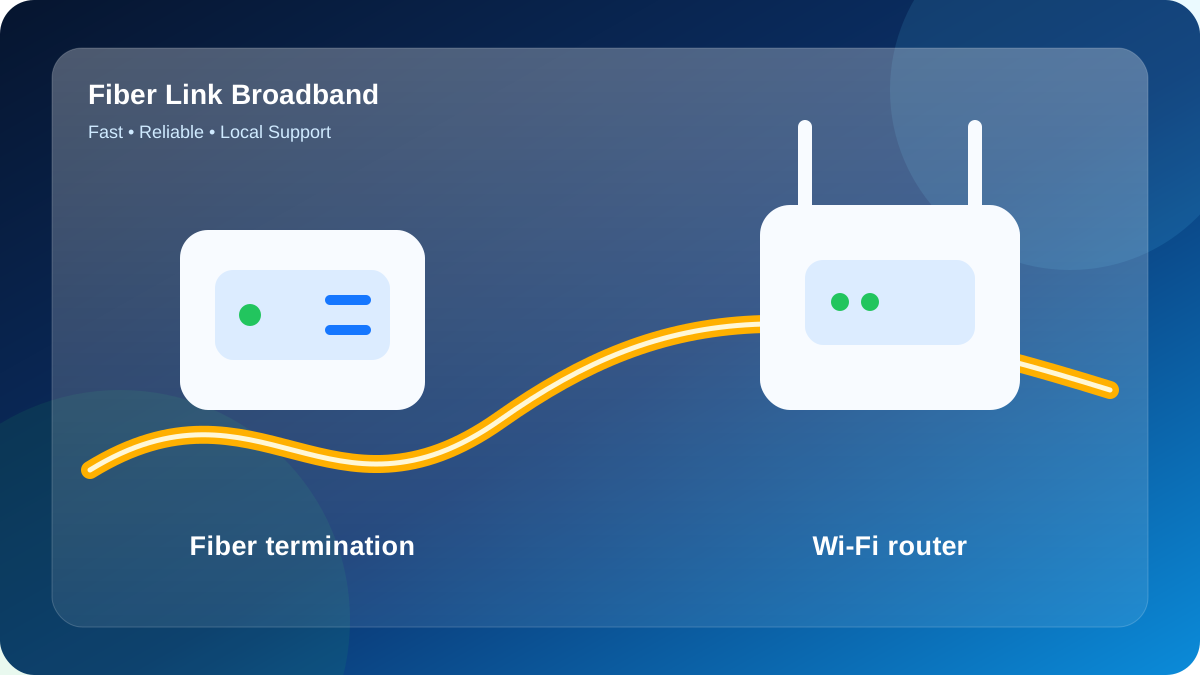
Planning your connection in Said-ul-Ajaib
Before the visit, clear the equipment area and identify who can approve drilling. If the property is rented, confirm the owner's requirements for cable clips and wall entry. Keep access available to any shared section on the proposed route. These practical arrangements can take longer than the optical joining itself.
Once the line is active, test a wired device and your usual work or study room. Ask how to report a fault and keep the account reference accessible. If the engineer repairs an existing fiber during the visit, ask where the joint has been protected and whether the optical reading was checked after completion. Keep the route clear during later furniture moves.
Build a booking that an installer can act on
A useful booking has four parts: the premises location, the approved route, the equipment position and the agreed scope. Send these together so the visit is prepared for the actual job. Mention a locked access area, an occupied workspace or a restriction on drilling before accepting an appointment. If the route has not yet been checked, ask for a survey window rather than treating the first enquiry as a guaranteed activation time.
Keep the quote in writing and separate the recurring plan from one-time work. Ask whether configuration, the router, the optical termination and any room-to-room Ethernet are included. At completion, keep the account reference and test the connection with your normal device. If something remains unfinished, describe it clearly in the handover message so a second visit has a defined purpose.
Example: different address spellings refer to one premises
If your documents use Saiyad-ul-Ajaib while a map label uses Saidulajab, send the complete written address and map pin together. Confirm the building and entrance in the booking message. Resolving the naming difference early avoids a technician searching for a different location.
Add the floor and access contact, then agree the router point and any drilling permission. At handover, use the same address in the support record. The aim is a clear premises identity across booking, activation and repair, not creating separate service assumptions from alternative locality spellings.
How a technician makes a fiber joint
A fiber joint reconnects the glass path that carries light. For an appropriate single-mode drop repair, a trained technician can use fusion splicing: the machine aligns prepared fiber ends and joins them with an electric arc. Mechanical splices use a different alignment method and may be selected for particular applications; twisting wires together is not a fiber repair.
- Identify and isolate: establish the affected cable, ownership and safe working access. Test before cutting so healthy neighbouring lines are not disturbed.
- Prepare: remove the damaged section, prepare the cable and strip the required coating. Clean the fibers and use a precision cleaver to create suitable ends, following the equipment instructions.
- Align and fuse: select the correct program for the fiber, inspect the preparation and run the splice. A poor cleave or contaminated end needs re-preparation.
- Protect: fit the splice protector, use the sleeve heater where required and secure the joint in an appropriate tray and enclosure with strain relief.
- Verify: check the optical path and restore service. The machine's estimated splice loss is not a substitute for an optical measurement and a working-connection test.
If the damaged cable has too little sound length, the repair may require a replacement section with more than one joint. The technician must also address the cause of the break. Never look into a fiber end or handle glass scraps; this is trained installation work, not a home repair procedure.
Tools and equipment used for installation and repair
| Equipment | Purpose |
|---|---|
| Cable and fiber strippers; aramid scissors | Prepare the jacket, strength members and coated fiber without damaging the glass. |
| Approved cleaner, lint-free wipes and precision cleaver | Prepare clean, correctly cleaved fiber ends for joining. |
| Fusion splicer and sleeve heater | Align and join compatible fibers, then protect the splice. |
| Protectors, splice tray, closure and cable fixings | Keep the joint supported and protected for its indoor or outdoor location. |
| Optical power meter and suitable test source | Measure optical power or link loss with compatible wavelengths and adapters. |
| Visual fault locator; OTDR when appropriate | Help trace continuity issues or locate optical events. Not every short drop repair needs an OTDR. |
| ONT, router, Ethernet cable and test device | Activate the service and check the usable connection after optical work. |
| Eye protection and fiber-scrap container | Control the hazards from small glass fragments during preparation. |
This describes a typical professional workflow, not a promise that every tool is carried to every visit. Ask which diagnosis and tests your quoted job includes. See the FOA installer toolkit reference and fusion-splicing guide for background.
Installation and fiber-repair timing
Planning estimates, not guaranteed appointment or repair times: a straightforward new drop installation may take roughly 2–4 hours on site once feasibility, permission and materials are ready. An accessible, simple drop-cable repair may take around 1–2 hours on site. These are illustrative allowances, not measured Fiber Link service commitments; ask for an estimate after diagnosis.
The arc that forms a joint is only one short step. Locating damage, gaining access, preparing cable, protecting the splice, measuring the optical path and confirming activation take additional time. A new cable route, several breaks, shared-network work or unavailable access can require a longer visit or another day. Appointment waiting time and provider-side activation are separate from hands-on work.
Fiber-break help for Airtel, Jio, Excitel and ACT connections
Fiber Link Broadband accepts enquiries for independent physical fiber-break and jointing work on Airtel, Jio, Excitel and ACT connections, subject to the location, diagnosis and permission to work on the affected cable. Share your current provider, exact address, ONT indicator status and a safe photo of visible damage when requesting a visit.
This is not a claim of official affiliation or authorised-provider status. Provider-owned cable and shared equipment require the network owner's approval; customer-owned sections also need the relevant property permission. Raise a ticket with your account provider first for its network. Billing, ONT registration, account restrictions and upstream outages remain with that provider. Agree the physical repair scope and quote before work; a splice cannot fix those account or network-control issues.
Questions before booking
Can the installation slot include activation?
Ask whether address approval, available capacity and provider configuration are ready. On-site work and account activation may be separate stages; confirm both before arranging your day around the visit.
Ask for an address check or repair assessment
Call 9971524677 or message Fiber Link Broadband. Include your full Said-ul-Ajaib address, floor, entrance, preferred access window and whether the enquiry is for a new connection or a fiber break. Confirm the current plan, complete charges and job scope before payment.
Conclusion
Start with the exact address and installation route, then compare plans and payable terms. Keep receipts and test the connection before the technician completes handover.