
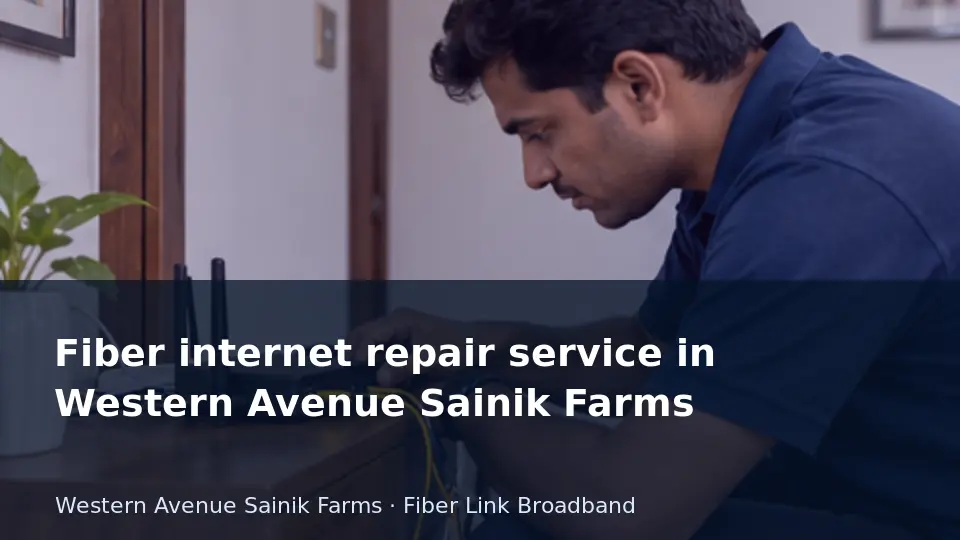
A loose or damaged cable is not a household repair project. Pulling, sharply bending or opening optical connections can make the fault worse.
This guide is for readers planning or reviewing a connection in Western Avenue Sainik Farms. It separates the decision you can make now from details that need an address-specific reply. The examples describe checks you can perform or discuss with the installer; they are not reports of a customer installation, measured local speeds or a promise that every nearby building is serviceable.
Create evidence that support can use
The most useful fault report says what failed, when it began and how broadly it affects the connection. Distinguish one device, one room and all devices. Note whether the optical terminal is powered and describe its labelled indicators without guessing their meaning. If a safe wired comparison is possible, include that result as well as the wireless symptom. Use the model's instructions or the provider's guidance for any restart.
Keep an account reference and a ticket number, but never include passwords, one-time codes or unrelated private information. A normal restart should not be confused with a factory reset, which can erase configuration and complicate diagnosis. For an intermittent issue, timestamps and recovery times help more than repeated vague messages. Update the existing ticket when new evidence appears, and ask for the next action or update time. If a physical fiber route looks damaged, leave connectors and repairs alone and arrange professional attention. An organised report cannot guarantee immediate repair, but it removes avoidable uncertainty from the investigation.
Compare evidence rather than marketing labels
Provider selection is easier when every candidate receives the same brief. Supply the exact address, intended billing period, essential rooms and simultaneous activities. Ask for a clear feasibility response and a quotation that includes equipment and installation scope. A generic locality page or a nearby customer's connection can inform the enquiry but cannot settle whether your particular premises is ready for service.
Evaluate the support process alongside the commercial offer. Find out how faults are logged, who provides updates and which equipment the provider manages. A local contact can be useful, but the process should not depend entirely on reaching one person informally. Avoid unsupported rankings such as fastest or best when the available evidence is only one test or an advertisement. Your decision can instead be specific and defensible: the address was confirmed, the terms were clear, the required workload was understood and the support arrangement was acceptable. Save the documents that support those conclusions for the eventual installation and renewal review.
Resolve installation WiFi issues before adding equipment
A newly installed line may work while a device is joined to the wrong network or placed in a weak room. Start with basic configuration and coverage checks.
What to do: Confirm the network name, test beside the router and compare the affected room before purchasing a repeater.
Read terminal lights before reporting a fiber fault
The optical terminal's indicators can provide useful clues, but labels vary by model. A clear photo and the equipment model help support interpret them.
What to do: Report the indicator labels and colours without unplugging or looking into the optical connector; follow the provider's instructions.
Distinguish a single-device fault from an outage
If only one phone fails while a wired computer works, the evidence points away from a complete line outage. Narrowing the scope saves unnecessary resets.
What to do: Test a second device and one wired connection where possible, then report exactly which combinations work.
Restart equipment without erasing its configuration
A normal power restart and a factory reset are different actions. A reset can remove settings needed for service and make a simple fault harder to resolve.
What to do: Use only the restart procedure advised by support and avoid the reset button unless explicitly instructed.
Keep a first-evening baseline after activation
The first normal evening is a useful time to record how the connection behaves with real household use. That record can support later fault comparisons.
What to do: Save the plan, equipment model, wired result and a few room tests without treating one result as a permanent performance guarantee.
Choose the fiber entry point before the technician arrives
The easiest external entry is not always the best indoor route. A planned entry can reduce exposed cable and avoid an inconvenient router position.
What to do: Identify a permitted route with the property owner and keep bends and doorways for the technician to assess safely.
Agree the installation scope before reserving a slot
Booking a visit and agreeing the work are separate steps. Router position, cable route and any additional equipment should be discussed while changes remain easy.
What to do: Send a simple description of the required rooms and ask which work is included in the proposed visit.
Prepare a concise ISP contact message
A useful first message identifies the account and the symptom without exposing passwords. It should distinguish a new enquiry from an active-service fault.
What to do: Include the service reference, address, start time and safe diagnostic results and ask for a ticket number.
Inspect the completed cable route before handover
The finished route should be secure and appropriate for doors, walkways and shared areas. Discuss concerns while the installer can explain the work.
What to do: Ask the technician to review exposed sections and avoid handling or sharply bending the fiber yourself.
Choose apartment broadband with building access in mind
A provider may operate nearby yet need permission to use the apartment's shared route. Equipment placement and access can matter as much as the subscription.
What to do: Check the permitted entry path and ask the provider to confirm your unit before comparing longer billing commitments.
Check the Ethernet link speed on a 200 Mbps plan
An older port or damaged cable can negotiate a connection below the broadband package. That local link then caps the result before internet traffic leaves the room.
What to do: Inspect the negotiated link speed on the device and try a suitable known-good cable before reporting a line fault.
Check the router before upgrading a busy household
A router can struggle with many active sessions even when the fiber line has enough capacity. Firmware, radio placement and connected equipment deserve attention before a purchase.
What to do: Compare a wired device with wireless devices during the same busy period and retain the router model in your notes.
Check serviceability near a locality boundary
A service description mentioning Sainik Farms does not settle the status of every nearby building. The practical cable route and network capacity remain decisive.
What to do: Give the exact property location and avoid substituting a nearby locality name for the address in the enquiry.
Plan apartment coverage separately from the fiber subscription
Fiber reaching an apartment does not establish coverage in every room. The indoor layout deserves a separate discussion before payment.
What to do: Mark rooms with weak existing reception and ask whether the quote includes any additional access point or cable work.
Include Ethernet needs in the home installation request
A desktop, console or television may benefit from a wired connection. It is easier to discuss the cable route before installation than after the router is fixed.
What to do: List the stationary devices and ask whether their cable runs are included or separately quoted.
Estimate transfer time on a 200 Mbps connection
Mbps measures bits per second, while downloads are often shown in megabytes. Confusing them creates unrealistic expectations about how fast a file should finish.
What to do: Divide Mbps by eight for an ideal MB/s ceiling, then allow for overhead and limits at the download server.
Prepare the rooms for a home WiFi installation
Clearing access to the agreed cable route helps the installer work without repeatedly moving furniture. It also makes the final route easier to inspect.
What to do: Make the router area accessible and have someone authorised to approve placement present during the visit.
Use the guide for your address
For Western Avenue Sainik Farms, send Fiber Link Broadband the complete building address, floor and map pin when requesting feasibility or a current quotation. Mention the particular requirement covered by this article so the reply can address your use case. Ask for the service scope, equipment responsibilities and complete payable amount in writing. Retain the response alongside your installation or support record, and revisit any unanswered point before committing to a longer payment period.
Contact 9971524677 or 9990881098. Review the published plan information and request an address check. Current availability and terms need confirmation.
All Fiber Link broadband plans
Compare the monthly plans listed on our broadband plans page.
| Plan | Speed | Monthly price | Included benefits | Availability |
|---|---|---|---|---|
| Fiber Start | 100 Mbps | ₹499/month | Unlimited data, free installation, 24×7 customer support | Enquire |
| Fiber Plus | 200 Mbps | ₹699/month | Unlimited data, free installation, 24×7 priority support | Enquire |
| Fiber Pro | 300 Mbps | ₹799/month | Unlimited data, free installation, 24×7 priority support | Enquire |
| Fiber Ultra | 500 Mbps | ₹1,699/month | Unlimited data, free installation, 24×7 priority support | Enquire |
Router and billing terms: 5G dual-band Wi-Fi router refundable security applies. Confirm the deposit, applicable taxes, billing period, complete first payment and installation feasibility for your address before booking. Terms apply.
Business leased line: Custom bandwidth, equal upload and download speeds, SLA-backed uptime, static IP options and priority local support. Call 9971524677 for a custom quote.